I live on a beautiful island. Turquoise water, soft trade winds, the kind of scenery people save for years to see for one week of vacation. And yet, if you look past the postcard, Grand Cayman is in the middle of the same chronic disease epidemic sweeping much of the developed world — obesity, heart disease, type 2 diabetes, and cancer are all climbing here, and like everywhere else, the rise is landing hardest on our younger population. Children and young adults are developing conditions we used to see only in late middle age.
It's a strange thing to sit with: living somewhere so many people associate with health and escape, while watching the health of the people who actually live here quietly erode.
An Island Runs on What Arrives by Ship
Part of the problem is structural, not personal. Grand Cayman imports the overwhelming majority of its food. Almost everything on our shelves has traveled a long way to get here, and that single fact shapes what we're able to buy. Shelf life becomes a requirement, not a preference. And there is no better tool for extending shelf life than industrial processing — refined starches, added sugars, stabilizers, preservatives, emulsifiers, and the seed oils that hold it all together on a long journey by sea.
We have our recognizable fast food chains here too — Burger King, KFC, Popeyes — the usual suspects that show up everywhere in the world now. But honestly, those aren't even what concerns me most. What concerns me is what's happening inside our grocery stores, dressed up as something better.
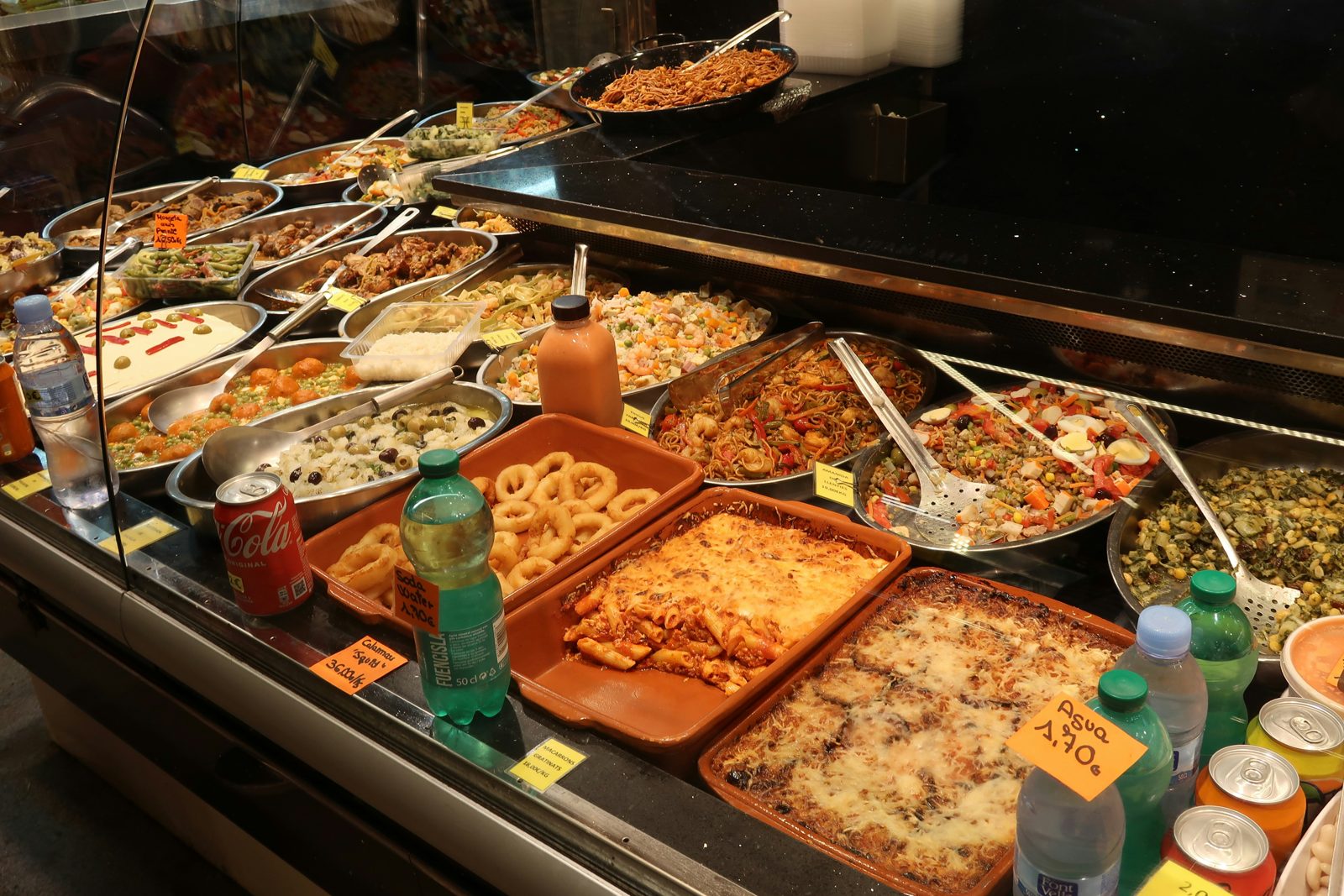
Walk past the prepared meal bars in almost any grocery store here and you'll see trays of food that look homemade — rotisserie chicken, pasta dishes, casseroles, sauces. There is no ingredient list in sight. Nothing to read, nothing to question, nothing to compare. You're simply trusting that it's food, prepared the way food should be. For many of us, that trust isn't warranted.
Meanwhile, the 'whole food' and organic sections carry prices that feel almost inhumane for a working family to sustain long-term. And even then, that premium doesn't buy you out of the problem entirely — produce shipped here is frequently treated with preservatives and pesticides at the dock before it's ever loaded onto the boat, simply so it survives the trip. Paying more doesn't always mean paying for less processing. Sometimes it just means paying more.
What the Research Is Actually Finding
This isn't just an island problem, and it isn't just a feeling. The science on ultraprocessed foods has become hard to ignore. More than 100 observational studies have linked diets high in these foods to a higher risk of chronic disease and earlier death. Observational research can't prove direct cause and effect on its own, but when dozens of independent studies keep pointing in the same direction, that consistency means something.
One study in particular stands out because of how tightly it was controlled. Twenty adults lived inside a metabolic ward, where researchers provided and monitored every single meal. Each person ate an ultraprocessed diet for two weeks and a minimally processed diet for two weeks, in random order, with both diets matched for calories, sugar, fat, fiber, and macronutrients. The only real difference was how industrially processed the food was.
The result: on the ultraprocessed diet, people ate about 500 more calories a day — without realizing it, and without the food being any less “nutritious” on paper. That's roughly an extra meal a day, driven not by hunger or willpower, but by the way the food itself was formulated. If you have ever wondered why a diet that looks fine on a nutrition label still leaves you overeating, this is a meaningful piece of the answer.
What's Being Proposed in the States
It's worth looking at what's happening in U.S. policy right now, because it tells us something about where this conversation is heading — and what's still missing here.
A recent survey of nearly 1,000 U.S. adults asked a direct question: which government actions do people actually want when it comes to ultraprocessed foods? The results were clear. Americans overwhelmingly favored information over restriction and restriction over cost.
An official definition of ultraprocessed foods — 84.7% support
Clearer federal dietary guidance — 82.4% support
Restricting ultraprocessed foods in schools — 68.4% support
Restricting them in grocery stores — 50.8% support
Taxing ultraprocessed foods — 43.6% support, the least popular option by far
People who saw these foods as unsafe or addictive were far more supportive of government action. People who felt confident identifying an ultraprocessed food when they saw one were also more supportive of policy change across the board — which tells us that awareness itself shifts behavior and belief, even before a single law changes.
That preference for clarity over restriction is already showing up at the federal level. The 2025–2030 Dietary Guidelines for Americans, for the first time since the guidelines began in 1980, advise limiting highly processed foods. Nutrition scientist Marion Nestle has pointed out the guidelines avoid the term “ultraprocessed” directly, but the intent is unmistakable given the research they cite.
Nestle also raised a harder question about who shapes these guidelines in the first place, pointing to the financial ties several scientific reviewers held with food industry groups and concluding that the guidelines:
“appear to have been captured by the meat and dairy industries.” — Marion Nestle
I don't share her concern about the specific recommendation toward traditional fats — grass fed butter, tallow, and full-fat dairy are, in my clinical view, far healthier choices than the industrial seed oils that dominate ultraprocessed foods. But her larger point stands, and it applies just as much here as it does in Washington: even guidelines framed as pure science are shaped by whoever is in the room when they're written. That is exactly why learning to read an ingredient list yourself matters more than waiting for an official verdict.
What This Means for Those of Us on an Island
We don't have an equivalent policy conversation happening here yet. There's no official Cayman definition of an ultraprocessed food, no labeling requirement pushing transparency at the prepared meal bar, no public guidance addressing what a food-import economy does to a population's health over decades. That gap doesn't mean we're powerless — it means the responsibility currently sits almost entirely with each of us, at the individual and family level, and that's worth naming honestly rather than pretending otherwise.
A few things I've found genuinely useful, living inside this exact food environment:
Read the ingredient list, not the front of the package. “Natural,” “high protein,” and “whole grain” are marketing words, not nutrition facts.
Be skeptical of the prepared meal bar precisely because it looks homemade. No ingredient list available should be treated as information in itself.
Where budget allows, prioritize simple, whole ingredients over processed convenience — and where it doesn't, focus first on removing vegetable oils and refined starches, which are usually the cheapest fix with the biggest impact.
Cook in batches when you can, so a homemade leftover becomes tomorrow's fast food instead of something from a package.
Stay informed rather than waiting on policy. Whatever Cayman or the U.S. eventually decides, your next meal is still your decision today.
None of this fixes an imported food supply overnight, and none of it erases the real cost — financial and otherwise — of eating well somewhere that makes it structurally harder to do. But understanding why the food here is built the way it is takes away its power to operate invisibly. That, to me, is where resilience actually starts: not in blaming ourselves for the food environment we didn't create, but in seeing it clearly enough to make different choices inside it.
Please noteThis content is for educational purposes only and is not a substitute for professional medical advice. Please consult your doctor or care team before making any changes to your diet, supplements, or treatment plan.
“I know that I know nothing.”— Socrates