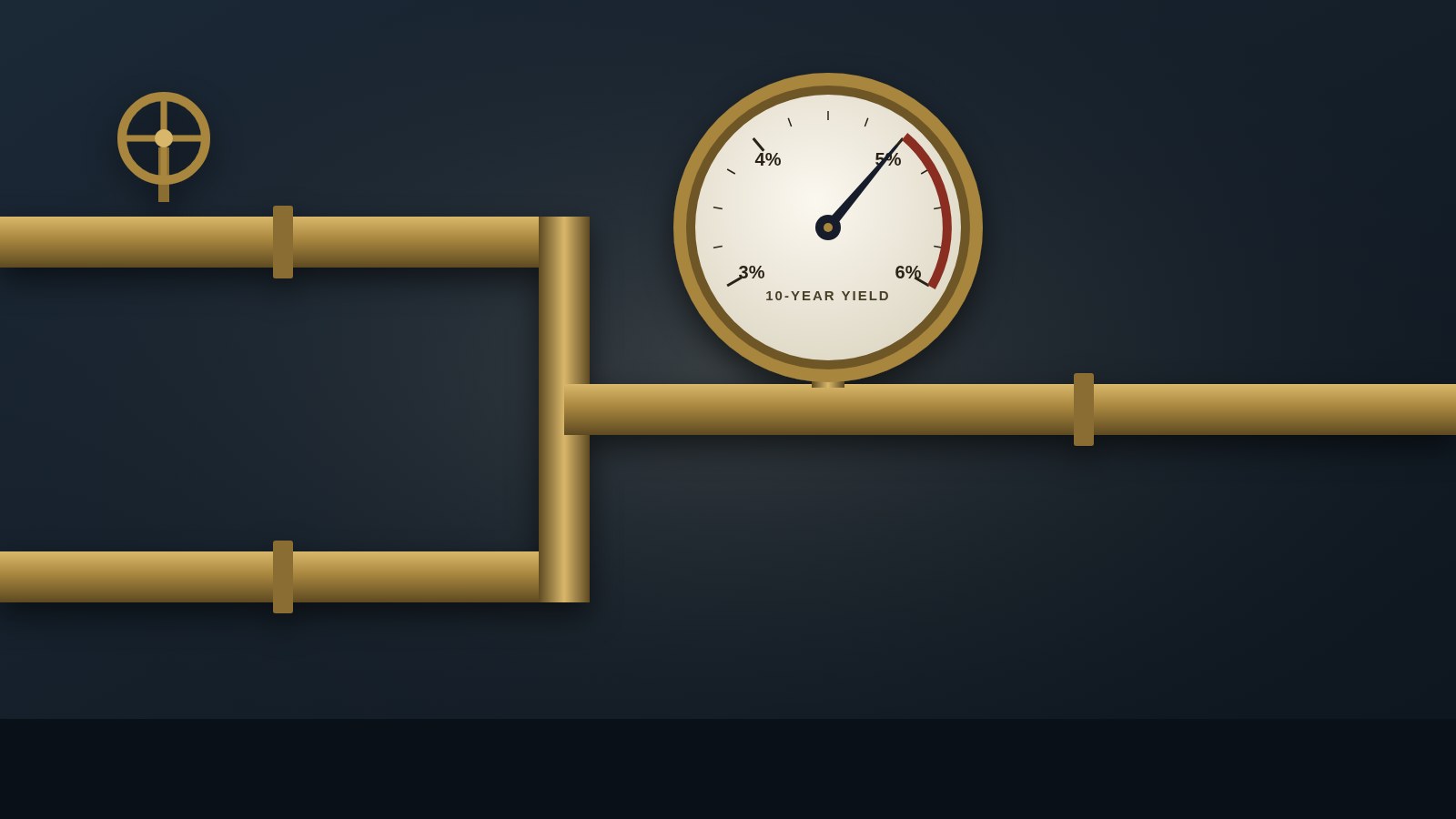
Was Treasury trying to steer rates, or just keep the plumbing working? Either way, the market answered the same.
In our last piece we covered Martin Armstrong’s view that Treasury’s tripled bond buyback was a failed attempt to push yields down. J.P. Morgan reads the same operation very differently: as routine market maintenance that was never meant to move rates. Here are both readings, what they agree on, and what it means for anyone holding bonds.
GG
Gordon Goss, CIM PFP FCSILead Financial Consultant · September 24, 2026 · 6 min read
On September 10, the U.S. Treasury bought back $6 billion of its own bonds maturing in 10 to 20 years. That was triple the size of its previous long-dated operation, and it plans to keep the larger long-end buybacks going through November 4, alongside up to $12.5 billion of buybacks in short-term bills.
In our last piece we published Martin Armstrong’s take: that this was Treasury Secretary Scott Bessent trying to force the 10-year yield below 4%, and failing. J.P. Morgan Wealth Management, in a piece published through Chase on September 22, describes the same operation in very different terms. Both are worth understanding, because the gap between them is itself a lesson.
Reading one: fixing the plumbing
J.P. Morgan’s explanation is that the buybacks are about liquidity, not rates. Treasury’s stated aim is to “create a regular, predictable opportunity for market participants to sell off-the-run Treasuries.”
Off-the-run bonds are older issues that are no longer the newest benchmark. They trade less often, so when markets are stressed they can be hard to sell at a fair price. In March 2020 the Treasury market, supposedly the deepest in the world, briefly seized up for exactly this reason, and the Federal Reserve had to step in. A regular buyback gives holders of those older bonds a reliable buyer, which should help keep the market working. On this reading, the buyback was never meant to lower yields, and judging it on that basis misses the point.
Reading two: a failed push on rates
Armstrong’s view is that the intent was to talk long rates down, and that the market called the bluff. Whatever the stated purpose, a Treasury Secretary signalling that he wants lower long-term rates while tripling purchases of long-dated bonds is sending a message, and markets hear messages as well as read mandates.
The September buyback, by the numbers
What both readings agree on
Both readings agree on what happened. They disagree on what it meant.
$6bn
10–20 year bonds bought back on Sept 10, triple the prior operation
$12.5bn
additional capacity for short-term bill buybacks
4.80% → 5.00%
10-year yield before the announcement, and on Sept 15
~5.40%
peak in the 20-year yield
Source: J.P. Morgan Wealth Management, “Treasury bond buyback 2026,” 22 September 2026.
Here is the part that doesn’t depend on whose account you prefer. After the announcement, long-term yields went up, not down. J.P. Morgan reports the 10-year rising from about 4.80% before the announcement to 5.00% on September 15, with the 20-year peaking around 5.40%. Market participants reportedly found the $6 billion figure “underwhelming.”
J.P. Morgan’s conclusion for investors is blunt, and it lines up with Armstrong’s more colourful one: buybacks provide marginal trading support but “do not control longer-term yields” and don’t guarantee any price gain for people who already hold bonds.
Whether it was meant to steer rates or only to keep the market liquid, the buyback didn’t stop long-term yields rising. The market set the price.
Reading the sources fairly
Neither account is neutral, and it’s worth saying so plainly. J.P. Morgan is one of the largest dealers in U.S. Treasuries. Its business depends on that market being seen as orderly and well run, so a “routine maintenance” framing suits it. Armstrong has spent decades arguing that governments are losing control of their debt, so a “failed intervention” framing suits him. The disciplined approach isn’t to pick a side. It is to notice that two sources with opposite incentives agree on the outcome: yields rose, and the buyback didn’t prevent it.
What it means if you hold bonds
Don’t count on a government backstop for bond prices. The Treasury’s own programme is designed to keep bonds tradeable, not to hold their value up.
Liquidity and price are different risks. A buyback can make it easier to sell a bond. It doesn’t make that bond worth more.
Older, less-traded bonds carry extra liquidity risk in a stress event, which is exactly the problem this programme exists to ease.
Duration is the risk that matters most when yields rise. The longer the bond, the more its price falls for every point yields climb.
Where this leaves us
This is why our structure doesn’t lean on long-dated government bonds as its safe anchor. Members hold real assets instead, with Argentine farmland and cattle, oil production and allocated precious metals, plus a treasury account for liquidity. Those assets carry their own risks, which we set out openly. What they don’t depend on is a debate about what Treasury really intended.
We’ll keep watching the same signals: whether the 10-year closes above 5.3%, how Treasury auctions are received, and what the Federal Reserve does if long rates keep climbing. The buybacks continue through November 4. So will our coverage.
Membership is free. Get our research as it’s published, and see how members hold real assets outside the bond market.
Hilarey Gould, J.P. Morgan Wealth Management, “Treasury bond buyback 2026,” Chase Learning & Insights, 22 September 2026.
Martin Armstrong, “Bessent ‘I Am The House’ Has Failed,” Armstrong Economics, 24 September 2026.
Gun Bay Insights, “The House Doesn’t Always Win,” September 2026.
This article is for general information only and reflects the author’s views. Descriptions of third-party views are summaries, not endorsements. It is not investment, legal or tax advice, and it is not an offer or solicitation. Bond prices fall when yields rise, and real assets can lose value and are generally illiquid. Seek qualified professional advice before acting.