In investing, timing is rarely everything. With food, it may matter far more than most of us realise.
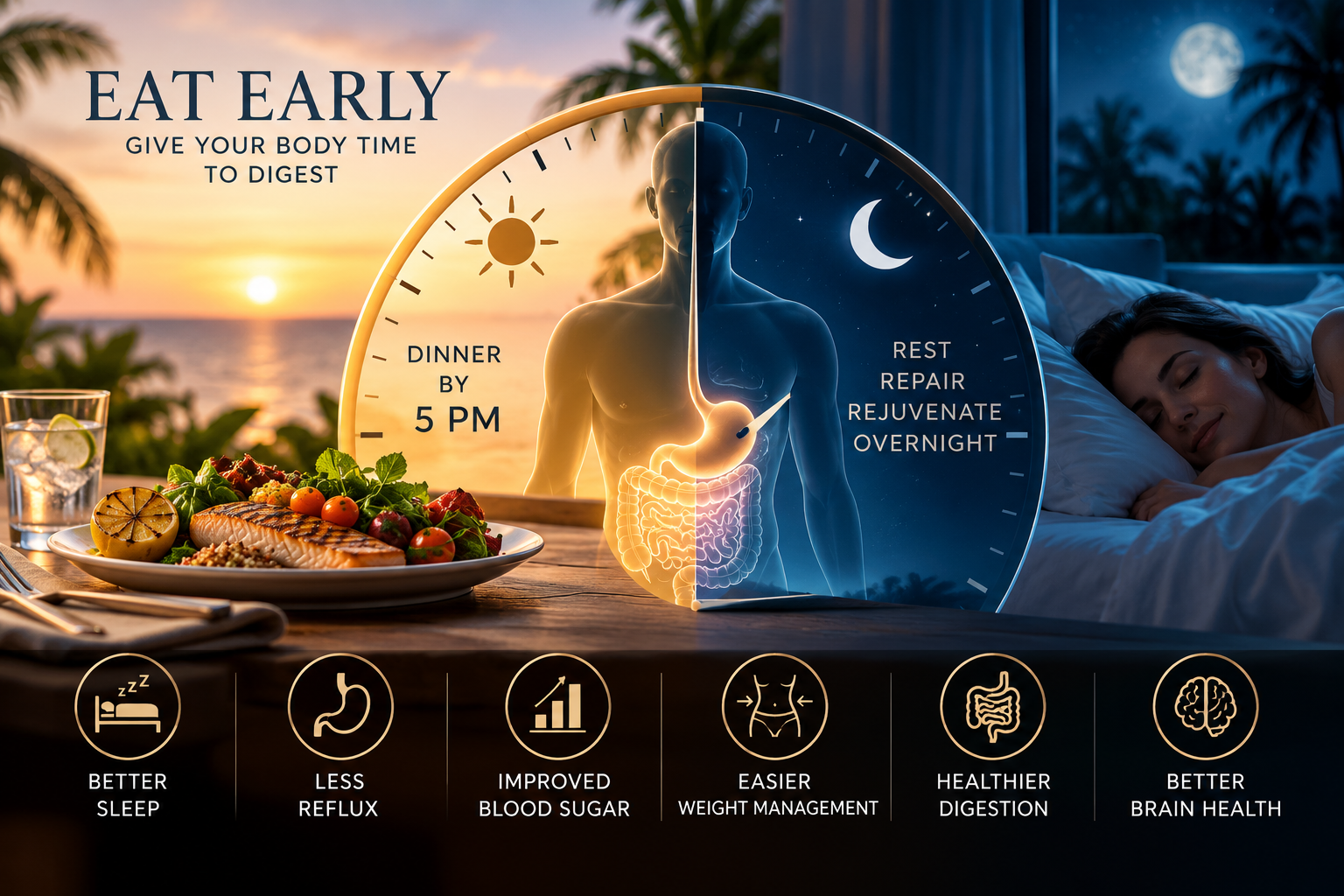
In our home, we follow a 16:8 intermittent fasting rhythm, eating within an eight-hour window each day, and we also include a regular 24-hour fast. Living this way raised a practical conundrum: when should the last meal of the day be? We settled on having dinner no later than 5 p.m.
That choice can complicate a night out with friends. Happily, many of them are embracing this way of life too, which makes planning much easier. Still, we have often wondered whether our instincts were right.
A recent article by Zena le Roux in The Epoch Times confirmed what we had intuitively come to believe: finishing your last meal at least three hours before bed, and ideally earlier, gives the body time to complete digestion and turn its energy toward the restorative work of the night. Here is why.
Why Timing Matters
Our metabolism runs on a daily clock, and it handles food far better earlier in the day than late at night.
Carbohydrate, fat and energy metabolism are all regulated by our circadian rhythm. In the morning, the pancreas releases insulin more efficiently, our cells respond to insulin more readily, and we burn more energy digesting a meal. By evening, all of these slow down.
The article offers a memorable image: picture a factory that winds down at night. When a truckload of materials arrives at midnight, workers must be called back in and the machines restarted. Eating late asks the same of the body.
Consistency matters too. Circadian researcher Jamie Zeitzer of Stanford notes that it is not only when you eat, but whether you eat at that time regularly, that helps the body settle into a healthy rhythm.
Six Benefits of Finishing Dinner Early
Moving your last meal earlier can improve sleep, digestion, blood sugar, weight and even brain health.
1. Better sleep
A University of Michigan study found that people who ate within an hour of bedtime had more than twice the odds of lying awake for 30 minutes or more during the night. Eating four to six hours before bed was linked with a better chance of getting enough sleep. One likely reason is that rising melatonin in the evening dampens insulin release, so a late meal asks the body to lower insulin and use it at the same time. Finishing early lets the body turn to its night-time work: repairing tissue, regulating immunity, consolidating memory and clearing waste from the brain.
2. Less reflux
Lying down on a full stomach makes it easier for stomach contents to flow back into the oesophagus. The closer dinner is to bedtime, the worse reflux tends to be, and it can quietly fragment sleep even without obvious heartburn. Lifestyle medicine physician Dr Sunil Kumar notes that people who move dinner earlier often see a change within a week or two.
3. Better blood sugar
For people with prediabetes or type 2 diabetes, meal timing is one of the simplest and cheapest tools available. In one study, eating dinner one hour before bed rather than four led to glucose levels 8.3% higher. In men with prediabetes, early time-restricted eating improved insulin sensitivity, a central theme in reducing the risk of chronic disease.
4. Easier weight management
When insulin has time to settle before bed, the body is better able to burn fat overnight rather than store it. In a 14-week study of adults with obesity, those who ate most of their food earlier in the day lost more weight and more body fat, including around the middle, than those who spread their eating across a longer day.
5. Easier digestion
Gut movement, digestive enzymes, nutrient absorption and even the gut microbiome all follow a daily rhythm, and the digestive system winds down as night approaches. Giving it a longer window to finish its work before sleep simply makes sense.
6. Better brain health
Early research suggests that a longer overnight fast may support BDNF, a protein sometimes described as fertiliser for the brain because it helps brain cells grow and stay healthy. Higher levels may support mental clarity and resilience against neurodegenerative disease, though more research is needed.
A Rhythm, Not a Rule
An earlier dinner suits many people, but it should feel like a sustainable rhythm rather than a rigid restriction.
Shift workers, pregnant women, athletes in heavy training and anyone with a history of disordered eating may need a more individual approach. The same applies to longer fasts such as the 24-hour fast we practise: people taking medication for diabetes or blood pressure, or managing other health conditions, should speak with their doctor first. As Dr Kumar puts it, an earlier dinner is a rhythm, not a rule.
How to set a new rhythm
Work backward from your bedtime. If you are usually asleep by 10 p.m., aim to finish eating by around 6 or 7 p.m. at the latest; earlier is even better.
Choose consistency over perfection. Eating at roughly the same time each day matters as much as how early you eat, and an occasional late dinner won't undo your progress.
Make dining out work. Suggest an early dinner or a lunch date instead, invite friends to your home for an early meal, or simply enjoy the company and a sparkling water while others eat. You may be surprised how many friends are ready to join you.
Anchor it to what you want. Tie the habit to an outcome you care about, such as better sleep, steadier energy or lower blood sugar, rather than willpower alone.
As Dr Kumar says, "It is the same food, placed better in the day."
Source and Credit
This post draws on "6 Surprising Things Happen When You Stop Eating Hours Before Sleep" by Zena le Roux, published in The Epoch Times on October 17, 2026, featuring insights from Dr Sunil Kumar, Jamie Zeitzer, Jerome Menet, Jaz Robbins and Jason Nelson.
This content is for educational purposes only and is not a substitute for professional medical advice. Please consult your doctor or care team before making any changes to your diet, supplements, or treatment plan.
"As to diseases, make a habit of two things: to help, or at least, to do no harm." — Hippocrates