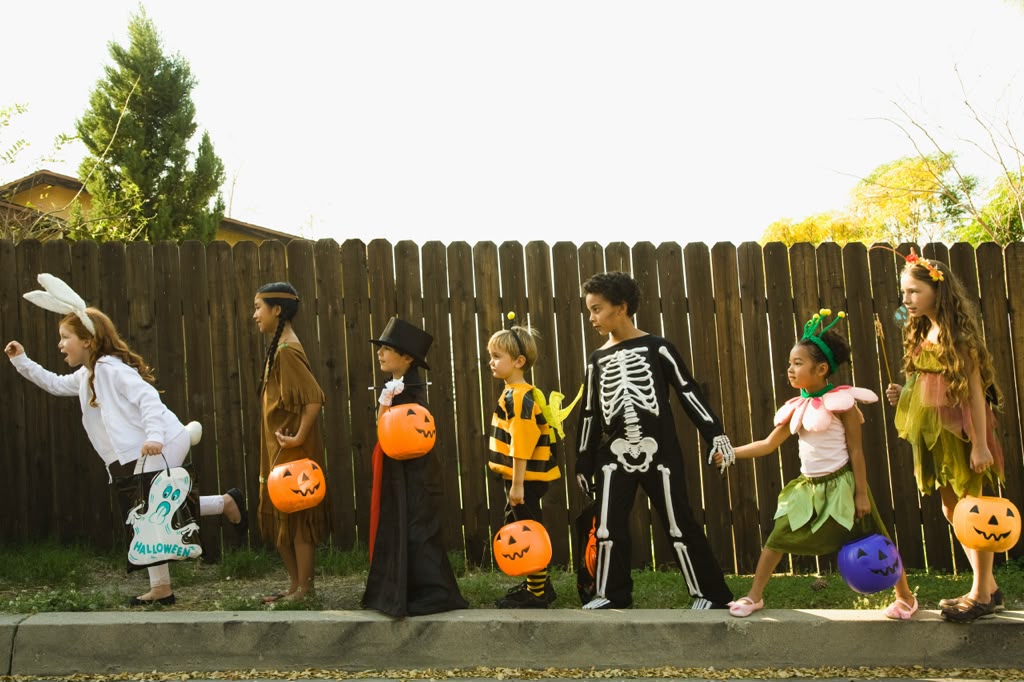
My children will tell you I have a long history of “ruining” birthday parties and Halloween. I understand why they say it, and I want to admit something first: I loved Halloween growing up. It was never about the candy. It was about creativity. I designed elaborate yard displays, built costumes from scratch, and was the go-to girl for makeup and special effects. That part was pure joy.
So this isn’t a post about cancelling fun. It’s about one ritual inside the holiday that we’ve stopped questioning: the candy.
It takes real creativity to make Halloween magical without relying on blood, gore, and a pillowcase full of chemical-laden confectionery. I know that artistry well. Now it’s time to turn that same imaginative energy toward protecting our children’s metabolic health.
The fear we had, and the risk we have
Kids who grew up in the 1970s will remember tossing out the apples and homemade treats. We were told strangers hid razor blades and poison in them. That fear turned out to be mostly myth. Sociologist Joel Best of the University of Delaware has studied “Halloween sadism” for decades. After reviewing news coverage going back to 1958, he could not find a single child killed or seriously injured by a tampered treat collected while trick-or-treating. As he points out, it is easy for a child to push a pin into a candy bar and then show it to a parent, and be rewarded with a flurry of adult concern.1
So we threw out the fruit and kept the candy. The real risk was never in the apple. It was in the brightly wrapped, bite-sized bars we kept.
The real monster: ultra-processed dopamine pellets
The real threat in those colourful, bite-sized wrappers is far more pervasive than any razor blade. Modern Halloween candy isn’t just sugar. It is industrial formulation. Under the NOVA classification system, most of these treats are textbook ultra-processed foods (UPFs): made from refined sugars, corn or glucose syrups, synthetic colours, and additives, and formulated to be hyper-palatable so that stopping at one is difficult.2
The numbers
The American Heart Association recommends that children aged 2 to 18 consume no more than about 25 grams of added sugar a day, roughly 6 teaspoons, and that children under 2 have none at all. Most children already exceed that on an ordinary day. In U.S. survey data, children averaged 80 grams of added sugar daily, about three times the recommended limit.3
Then Halloween arrives. Public health experts estimate that a typical child brings home between 3,500 and 7,000 calories of candy in one night, and some estimates put the haul at around 3 cups of sugar and 1½ cups of fat.4 Even eaten slowly over several weeks, that is a large amount of sugar landing on a child’s metabolism, and it often stretches well past Christmas.
“Let them be kids. They’ll burn it off.” Will they?
This is the argument I hear most, and the data don’t support it.
Globally, the share of children and adolescents aged 5 to 19 who are overweight rose from 8% in 1990 to 20% today.5 In 2025, UNICEF reported that obesity overtook underweight as the most common form of malnutrition among school-aged children, affecting 1 in 10, or 188 million, worldwide. UNICEF also warns that ultra-processed and fast foods are shaping children’s diets through the environments around them rather than through personal choice.6
The metabolic consequences are arriving earlier, too. A study in Diabetes Care projected that if current trends continue, type 2 diabetes in U.S. young people could rise by 673% by 2060.7 In adolescents, prediabetes rose from 12% to 28% between 1999 and 2018.8 The AHA notes that overweight children who keep consuming more added sugar are more likely to become insulin resistant, a precursor to type 2 diabetes.3
The adult data show where this trajectory leads. A major Journal of the American College of Cardiology study found that by 2017–2018, only 6.8% of U.S. adults had optimal cardiometabolic health, and blood glucose and body fat worsened the most over two decades.9 That decline starts in childhood. Repeated glycemic spikes and an inflammatory diet are key drivers of systemic chronic inflammation, which plants the seeds of chronic disease long before adulthood.10
Children are not burning it off. Insulin resistance is building quietly and earlier than ever.
A view from Grand Cayman
I’ve had the privilege of making my home in Grand Cayman, and the beauty of these islands sits alongside a health picture that worries me deeply as a nurse.
The Caribbean is facing the same metabolic crisis as the rest of the world, and in some ways it is facing it sooner. The Caribbean Public Health Agency (CARPHA) reports that one in three children in the region is overweight or obese, which is why prevention needs to start early in life. PAHO data show that The Bahamas, Saint Kitts and Nevis, and Belize are among the top 20 per cent of countries worldwide for overweight and obesity.11
The numbers in Cayman are just as sobering. In the 2023–2024 school entry screening, 13% of children starting Reception were already obese, and among children aged 7 to 18, 14% were overweight and a further 20% were obese.12 In the adult population, the national STEPS survey found 69.6% overweight or obese in 2023, compared with 70.6% in 2012. In other words, a decade passed with almost no change. Early survey results also suggested that more than 97% of the population may be at risk of more serious conditions such as cardiovascular disease and diabetes.13
Cayman’s Chief Medical Officer has suggested that one reason the islands’ obesity rates resemble those of the United States is that Cayman imported that country’s processed-food diet and eating habits.14 Halloween’s candy ritual is part of the same package. Before we accept that tradition unquestioned, it’s worth asking whether it serves the children who are inheriting it.
There is good work underway. In 2025, CARPHA released technical recommendations for nutrition standards covering all foods and drinks sold or provided in Caribbean primary and secondary schools. CARPHA also stresses that obesity is not a personal failure but a complex chronic disease shaped by systems and environments.11 Halloween is one of those environments, and it can be changed.
A child’s metabolism, under quiet pressure
The case against the candy ritual isn’t about one night of sugar. It’s about where the trend lines are pointing — globally, and here at home.
Sources: WHO; American Heart Association; Diabetes Care (2023); Cayman Islands School Health Programme, 2023–2024. Full citations below.
The reward loop: why “just one” rarely stays one
Many children can’t stop once they start, and there’s a reason for that. Sugar triggers the brain’s reward system. In animal research, rats given intermittent access to sugar binged on it, releasing dopamine each time, much like the response to most addictive substances.15
I want to be careful here. Whether sugar is truly “addictive” in humans is still debated. A Cambridge review found little evidence for sugar addiction in humans and noted that binge-like behaviour in animals appeared mainly under intermittent access.16 But look at what Halloween is: a once-a-year flood of unlimited sugar after a long buildup. That is intermittent access almost exactly.
Whatever we call it, we are teaching the brain a pattern: reward comes in a wrapper, and more is better. Early habits shape adult appetites. The AHA itself notes that taste preferences form early in life, so limiting added sugar can help children develop a lifelong preference for healthier foods.3 That is the foundation I’m worried about.
The bill comes due: the economic cost of a sugar-soaked childhood
Health and wealth are tied together, and childhood metabolic disease affects both. Families pay for it, and so do health systems and national economies. UNICEF projects that by 2035, overweight and obesity will cost the global economy more than US$4 trillion a year. The cost also falls on individual countries: without prevention, Peru alone could face more than US$210 billion in lifetime health and economic costs from obesity-related illness.6
A child who develops insulin resistance at 10 can face decades of medications, monitoring, and lost productivity, and those costs build over a lifetime. Prevention is the best investment a family can make, and it begins with what we normalize in childhood, including the night we hand children a pillowcase of sugar and call it tradition.
Redefining the tradition
Changing Halloween doesn’t mean taking away the fun. It means elevating it.
- Feed them first. Serve a real dinner with protein, fibre, and healthy fats before trick-or-treating. A full child collects candy rather than eating it on the walk.
- Shift the reward. Put the excitement in costumes, face painting, pumpkin carving, and neighbourhood connection rather than making sugar the centre of the celebration.
- Use the swap strategy. Let kids enjoy trick-or-treating for the experience, then trade the bulk of the haul for something they truly want, such as a new book, a game, or an adventure.
- Upgrade the doorstep. Choose high-cocoa dark chocolate, small nut butter cups (where allergies aren’t a concern), or fun non-food items like glow sticks, stickers, and bubbles.
- Eat candy with meals, not as a snack. A piece after a balanced meal causes less of a blood sugar spike than grazing through the day.
- Set an end date. Agree on a date, such as a week after Halloween, when any leftover candy goes.
- Watch for the real danger. Halloween has more child pedestrian deaths than any other day of the year, so reflective tape and a flashlight will protect your child more than inspecting their candy.17
Let’s keep the creativity, discard the metabolic wreckage, and give kids a tradition that leaves them energized instead of crashing.
A call to change the tradition itself
Tradition is something we keep choosing. We changed Halloween once already, when fear of strangers made us throw out the fruit. We can change it again, this time based on evidence instead of legend.
Imagine a Halloween where neighbourhoods compete for the best-decorated porch, where community events give out prizes for costumes instead of pounds of candy, and where schools celebrate creativity rather than sugar. Island communities are small and close-knit enough to lead this kind of change. A few schools, churches, and neighbourhoods choosing a different kind of celebration could set a new standard for an entire island. The dressing up, the stories, the walk through the neighbourhood, and the sense of wonder are the parts worth keeping. The candy was never the point.
If that makes me the mom who ruins Halloween, I’ll accept it. I’d rather ruin one night of sugar than watch our children inherit a lifetime of metabolic disease, and the bill that comes with it.
This content is for educational purposes only and is not a substitute for professional medical advice. Please consult your doctor or care team before making any changes to your diet, supplements, or treatment plan.
“As to diseases, make a habit of two things: to help, or at least, to do no harm.”— Hippocrates