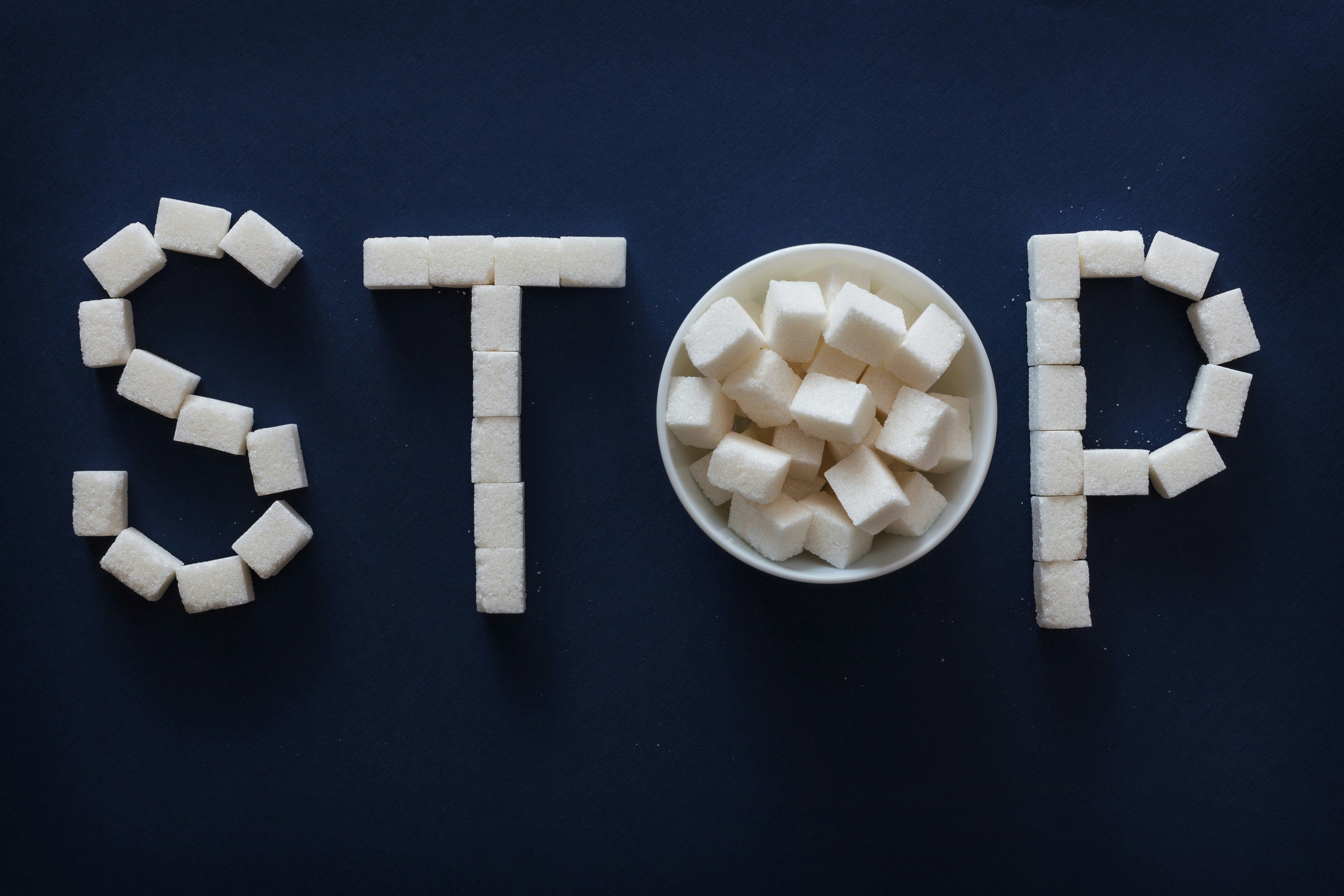
Most people who go into nutrition, dietetics and nursing do it for one reason: they want to help people live healthier lives. I was one of them, until I wasn't.
For years, I passed on the advice I had been taught, confident it was grounded in sound science. Eat less fat. Build your meals around grains. Count calories. A calorie is a calorie. It took time, and a great deal of watching people struggle despite following the rules, for me to start asking a difficult question: where did this advice actually come from?
The answer is uncomfortable. Much of the nutrition guidance that shaped our training, and still shapes public advice today, was influenced by the very industries that profit from what we eat.
How the Advice Was Shaped
The foundations of modern nutrition teaching were laid in the 1960s and 1970s, at a time when industry money quietly helped decide which questions were asked and which answers were promoted.
The sugar papers (1960s). In 2016, researchers analysing internal industry documents revealed that the Sugar Research Foundation had paid Harvard scientists to write an influential review that downplayed sugar's role in heart disease and pointed the finger at dietary fat. The funding was not disclosed at the time.
The national dietary goals (1977). A U.S. Senate committee published the first national dietary goals, urging Americans to cut fat and eat more carbohydrates. The science behind the low-fat message was far less settled than it appeared, but the advice stuck.
The food pyramid (1992). The USDA Food Guide Pyramid placed 6 to 11 daily servings of bread, cereal, rice and pasta at its base, with fats at the top to be used sparingly. Food manufacturers responded with a wave of low-fat products, often loaded with sugar and refined starch.
These guidelines became the backbone of what was taught in classrooms, textbooks and clinics. Generations of nurses, dietitians and nutritionists, myself included, learned them as settled fact.
Industry Inside the Profession
The influence didn't stop with the guidelines. It reached into the professional organisations, education and policy committees that shape how nutrition is practised.
Professional sponsorship. For years, the largest organisation of nutrition professionals in the United States, the Academy of Nutrition and Dietetics, accepted sponsorship from companies such as Coca-Cola, PepsiCo and major cereal and candy makers. A 2022 analysis of internal emails, published in Public Health Nutrition, documented close relationships between the Academy and food, beverage and pharmaceutical companies, including investments in their stocks.
Continuing education. Practitioners must earn continuing education credits to keep their credentials. Some of those courses have been sponsored by soft drink and food companies, including sessions on sugar and sweeteners.
Funded research. In 2015, it was revealed that Coca-Cola had funded a research group that promoted exercise as the main solution to obesity, steering attention away from sugary drinks and diet.
The people who write the guidelines. A 2022 study found that 95% of the members of the committee advising the 2020 U.S. Dietary Guidelines had conflicts of interest with the food or pharmaceutical industries.
None of this requires a single villain. It only requires a system in which those who profit from food help fund the science, the education and the professional bodies that tell us what to eat.
Four Ways Industry Shaped What We Were Taught
For decades, standard nutrition education has prioritised macronutrient maths and convenient food products over human metabolic biochemistry. Four structural pillars help explain how.
1. Funding shapes the findings
When food corporations fund research chairs, educational modules and professional conferences, research priorities can shift. A Cochrane review of industry-sponsored research found that studies funded by industry were more likely to reach conclusions favourable to the sponsor's products than independently funded studies. Critics argue that, over time, this has amplified research supporting fortified processed foods and low-fat alternatives, while questions about refined grains, industrial seed oils and food additives received far less attention. Those biases then find their way into textbooks and continuing education.
2. The low-fat message ran ahead of the evidence
The dietary guidelines taught to generations of practitioners, limiting fat and building meals around grains, were introduced in 1977 and 1983 before randomised controlled trial evidence supported them. A 2015 analysis in Open Heart concluded that the trial data available at the time did not support the restrictions. The role of saturated fat remains hotly debated, and reviews continue to reach different conclusions. Yet the low-fat model became the gold standard of clinical practice, steering many people away from nutrient-dense whole foods and toward refined carbohydrates and industrial seed oils.
3. Calories over chemistry
Conventional curricula are anchored in the "calories in, calories out" model, which treats all calories as metabolically equal, as though 100 calories of broccoli acts in the body the same way as 100 calories of high-fructose corn syrup. This approach treats the body like a simple furnace rather than a complex hormonal system, and it largely overlooks insulin. By focusing on energy balance alone, it fails to account for the way ultra-processed foods disrupt fullness signals, drive overeating and contribute to insulin resistance. Large studies have linked higher intake of ultra-processed food to higher rates of cardiovascular disease.
4. Food processing was left out of the picture
The NOVA classification system, which sorts foods by the extent of industrial processing rather than nutrients alone, has received little attention in traditional nutrition education. Instead of teaching students to recognise industrial additives, emulsifiers and flavour enhancers, curricula have often endorsed packaged "diet" foods simply because they fit a low-fat or low-calorie profile.
Recognising that nutrition guidelines were shaped as much by agricultural and industry lobbying as by metabolic science is an essential step toward advice that truly serves public health.
A Global Ripple Effect, Including the Caribbean
The influence of U.S. nutrition policy did not stay within American borders. U.S. dietary guidelines, the food pyramid and the research behind them became a template for nutrition education and clinical practice around the world.
Guidelines that travelled. Many countries modelled their own food-based dietary guidelines on the U.S. approach, adopting the same low-fat, grain-based foundations. Nutrition textbooks, research and professional standards developed in the United States became reference points in universities and clinics worldwide.
Training abroad. In smaller nations, including across the Caribbean, many dietitians, nutritionists, nurses and doctors complete their training in the United States, Canada or the United Kingdom, bringing those curricula and standards of practice home with them. Regional guidance and professional training have often drawn on the same evidence base and assumptions.
Industry-funded science goes global. The International Life Sciences Institute (ILSI), founded in 1978 by a Coca-Cola executive and funded by major food and beverage companies, established branches around the world. Researchers have documented how ILSI shaped nutrition science and policy in countries such as China, steering attention toward physical activity and away from sugar and processed food.
An imported food supply. The Caribbean imports most of its food, much of it from the United States, and highly processed products and sugary drinks have become everyday staples. At the same time, the region now faces some of the highest rates of diabetes, obesity and other chronic diseases in the Americas.
Resistance to change. When Caribbean nations have moved to protect public health, industry pushback has followed. Efforts across CARICOM to introduce clear front-of-package warning labels on foods high in sugar, salt and fat met strong opposition from food and beverage interests, slowing progress for years. Some countries, such as Barbados with its 2015 tax on sugar-sweetened drinks, have pressed ahead regardless.
As a resident of the Cayman Islands who is privileged to call this region home, I believe this history matters. The advice many health professionals across the Caribbean were trained to give, and the foods now filling supermarket shelves, were shaped far from these shores by interests that did not have the region's health at heart. Supporting a return to traditional, whole-food ways of eating, and questioning imported dietary dogma, is one way all of us who care about these communities can help protect their health.
Good People, Flawed System
I want to be clear: this is not an attack on dietitians, nutritionists or nurses. The vast majority entered their fields with genuine compassion and a sincere desire to help. They teach what they were taught, follow the guidelines they are required to follow, and often work within systems that leave little room to question them.
The problem is not the people. It is the foundation they were given to stand on.
There are encouraging signs of change. In 2019, the American Diabetes Association recognised low-carbohydrate eating patterns as among the approaches with the strongest evidence for improving blood sugar in diabetes, a significant shift from decades of low-fat, high-carbohydrate advice. A growing number of practitioners are embracing metabolic health, insulin resistance and whole-food nutrition, and many are speaking openly about the limits of what they were taught. Change is slow, but it is happening.
The most significant shift came in January 2026, when the United States released its new Dietary Guidelines for Americans 2025–2030. After decades of grain-heavy advice, the new guidance turned the old food pyramid on its head, making protein a priority at every meal alongside healthy fats, vegetables and fruit, and calling on Americans to cut back sharply on highly processed foods and added sugars.
I support this change 100%. It reflects much of what I have been saying for more than 30 years. But just as the old guidelines took decades to spread around the world, it will take time for other countries, their health systems and their training programmes to adopt this thinking. And you can bet there will be resistance, from industries that profited from the old model, and from institutions that built their teaching on it.
My Turning Point
My father died of heart disease at just 53. His death changed the course of my life and led me into nursing, determined to understand what had taken him and to help others avoid the same fate.
Over the years I had the privilege of working in many areas of healthcare, including cardiovascular surgery. There, I worked with a surgeon who insisted that his patients follow an Atkins-style diet, high in fat and very low in carbohydrates, before he would perform their CABG, a coronary artery bypass graft. Nicknamed a "cabbage" in hospital shorthand, it is open-heart surgery in which a blood vessel taken from elsewhere in the body is used to reroute blood around blocked arteries in the heart. At the time, his approach made little sense to me. Everything I had been taught said fat was the enemy of the heart. Fat and no carbohydrates to help with heart disease? It was the first of many moments that made me question what I had been taught.
Later, I moved into oncology and then hospice care, and I began quietly collecting observations. Patient after patient, diagnosis after diagnosis, I kept asking myself: what is the common thread here? I even found myself asking the same question as a school nurse, watching children struggle with their behaviour, energy and focus, and noticing what was in their lunchboxes and vending machines.
Again and again, one thread ran through it all: sugar.
I have been a "sugar buster" for more than 30 years now. Today, as the research on insulin resistance, ultra-processed food and chronic disease continues to grow, it looks like I may have been on to something.
Today, my work focuses on what I believe gets to the root of so much chronic disease: insulin resistance, ultra-processed food and the terrain of the body. I still share the same goal I had at the beginning of my career, to help people live healthier lives. I simply no longer accept that the advice is right just because it is official.
Questions Worth Asking
Whether you work in healthcare or are simply trying to eat well, these questions can help you think more critically about the nutrition advice you encounter:
Who funded this research, and who benefits from its conclusions?
Does this recommendation focus on whole foods, or on products?
Has this advice been tested in people over the long term, or is it based on assumptions?
Does it address the root cause, such as insulin resistance, or only manage the symptoms?
Am I seeing results when I follow it?
Good intentions deserve good science. When we start asking who shaped the science, we can begin building nutrition advice that truly serves people rather than profits.
Sources and Further Reading
Kearns CE, Schmidt LA, Glantz SA. Sugar industry and coronary heart disease research: a historical analysis of internal industry documents. JAMA Internal Medicine, 2016.
U.S. Senate Select Committee on Nutrition and Human Needs. Dietary Goals for the United States, 1977.
US Department of Agriculture. The Food Guide Pyramid, 1992.
Carriedo A, et al. The corporate capture of the nutrition profession in the USA: the case of the Academy of Nutrition and Dietetics. Public Health Nutrition, 2022.
Mialon M, et al. Conflicts of interest for members of the U.S. 2020 Dietary Guidelines Advisory Committee. Public Health Nutrition, 2022.
Evert AB, et al. Nutrition therapy for adults with diabetes or prediabetes: a consensus report. Diabetes Care, 2019.
Lundh A, et al. Industry sponsorship and research outcome. Cochrane Database of Systematic Reviews, 2017.
Harcombe Z, et al. Evidence from randomised controlled trials did not support the introduction of dietary fat guidelines in 1977 and 1983. Open Heart, 2015.
Srour B, et al. Ultra-processed food intake and risk of cardiovascular disease: prospective cohort study (NutriNet-Santé). BMJ, 2019.
Monteiro CA, et al. Ultra-processed foods: what they are and how to identify them. Public Health Nutrition, 2019.
Greenhalgh S. Making China safe for Coke: how Coca-Cola shaped obesity science and policy in China. BMJ, 2019.
This content is for educational purposes only and is not a substitute for professional medical advice. Please consult your doctor or care team before making any changes to your diet, supplements, or treatment plan.
"As to diseases, make a habit of two things: to help, or at least, to do no harm." — Hippocrates